

One Lab.
From CBCT Planning to Final Crown
DTS manages every phase of the implant case in-house: treatment planning, surgical guide, immediate provisional, and final restoration - designed by the same CDT who fabricates each component.
Prosthetically driven · US-fabricated · CDT-reviewed
THE WORKFLOW PROBLEM
Most Implant Cases Are Split Between Two Separate Labs
The standard workflow:
One provider handles treatment planning and guide fabrication.
A different lab, often chosen separately, handles the provisional and final restoration.
The planning data: implant position, emergence profile, prosthetic objectives - rarely travels intact between them.
The result is a restoration workflow that begins again from a scan body and a shade tab, with no connection to the clinical decisions made at treatment planning. Provisional contours are adjusted empirically. Emergence profiles are re-established. The final crown is designed around what the tissue did, not what was planned.
Split Workflow
→ Planning lab: no restoration data
→ Restoration lab: no planning data
→ Provisional adjusted chairside
→ Emergence re-established empirically
→ Final crown designed around healed tissue
DTS Complete Workflow
✓ Planning and restoration: same CDT
✓ Provisional designed before surgery
✓ Emergence profile pre-defined at planning
✓ Post-op scan aligned to original plan
✓ Final crown fabricated to conditioned tissue

Final
Restoration
Custom implant crown fabricated after post-op records are submitted and aligned to the as-placed implant position. The delivered emergence profile matches the profile that conditioned the tissue during healing. Seating is passive, no chairside adjustment required. Available in zirconia or lithium disilicate glass-ceramic, monolithic or layered. Standard shade match to VITA Classical. Close-match characterization and surface staining included.
Tissue Management
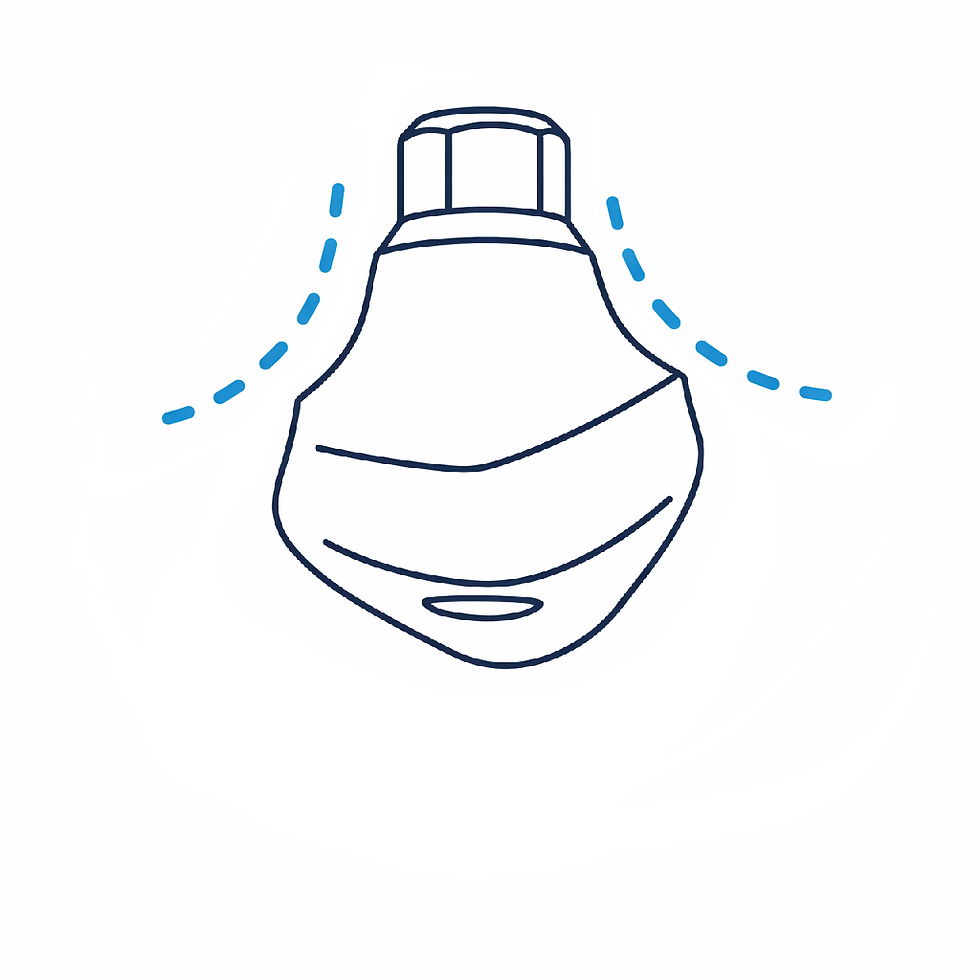
Soft tissue is conditioned to the planned emergence profile from day of surgery. Both components are fabricated before surgery and delivered together with the guide. For immediate-load cases: a screw-retained PMMA provisional crown. For deferred-load cases: a custom healing abutment maintaining the planned emergence contour throughout osseointegration without loading the implant. Protocol confirmed at case submission.

Surgical
Guide
A fully guided surgical guide fabricated from the approved treatment plan. Implant position, axis, and depth are structurally enforced by the guide, derived from the prosthetic design and not approximated from available bone. Compatible with all major implant systems. OEM metal sleeves included. Ships together with the provisional component as a single package, ready before the surgery date. No separate order required.

Treatment Planning & Smile Design
Prosthetically driven CBCT analysis with implant position derived from the definitive crown design. Crown contour, emergence profile, and tissue architecture are locked before guide fabrication. For anterior esthetic cases, smile design parameters (tooth shape, proportion, and incisal edge position) are defined from initial records. You review a planning video and approve before fabrication begins. Revisions are unlimited and included.
From the first CBCT to the final crown seating - planning, surgical guide, provisional, and final restoration - designed and fabricated in-house by the same CDT team.
WHAT WE PROVIDE
Every Phase.
One Lab.

1
Submit Records
& Treatment Planning
Upload CBCT (DICOM), intraoral scan (STL), clinical photos, and Rx via the DTS portal. Include implant system, platform, and desired protocol (immediate load or healing abutment). For anterior cases, include smile photos and references for tooth shape and incisal edge position.
DTS reviews records and returns a prosthetically driven treatment plan: implant position, emergence profile, crown contour, and smile design defined in the virtual patient. Review the planning video and request unlimited revisions.
Fabrication begins only after written approval.
2
Surgical Guide
+ Provisional Fabricated
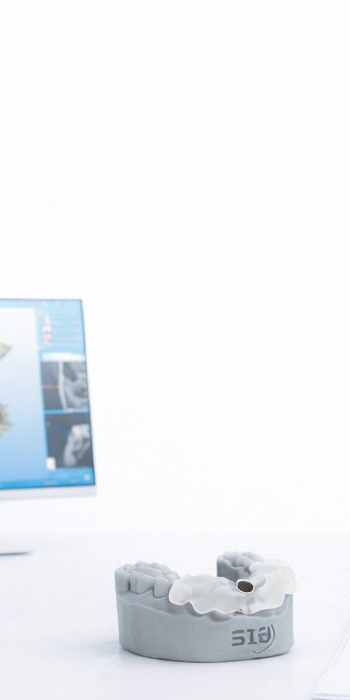
Following treatment plan approval, DTS fabricates the surgical guide and the immediate component simultaneously.
Immediate provisional: Screw-retained provisional crown pre-fabricated to the planned emergence profile, ready before the surgery date.
Healing abutment: Custom lab-fabricated abutment contoured to the planned emergence shape - maintains soft tissue architecture throughout osseointegration without loading the implant. Both components ship together.
Standard turnaround: 5 business days from approval.

3
Surgery
& Healing Phase
The guide, provisional SRC, or healing abutment are placed at surgery.
DTS remains available by direct CDT contact throughout healing for any questions on the provisional, tissue response, or protocol adjustments. Tissue is conditioned to the planned emergence profile during osseointegration. The provisional is monitored and reprinted as needed. An optional 3-month reprint is available to refine emergence contour and confirm esthetics as tissue matures. Transition from healing abutment to provisional SRC is available at any point during healing.
Patient and doctor approve the esthetic result before final fabrication begins.

4
Post-Op Records:
Scan Bodies + Photogrammetry
After osseointegration is confirmed, place scan bodies and collect a post-operative intraoral scan (STL). Photogrammetry is strongly recommended for full-arch, multi-unit cases, and any case requiring maximum accuracy.
DTS aligns the post-op scan to the original treatment plan, measuring and compensating for deviation between planned and as-placed implant position. The final restoration is designed to the actual position - ensuring passive fit, accurate emergence, and correct occlusion at delivery.
Standard turnaround: 5 business days from post-op submission.
5
Final Restoration
Fabricated & Delivered
The final implant crown is fabricated to the conditioned emergence profile and the aligned post-op implant position. Passive fit is verified to the actual as-placed implant position before shipment.
Available in monolithic or layered zirconia or lithium disilicate glass-ceramic, as discussed at planning.
Shade matching to VITA Classical reference. Close-match characterization included as standard. Complex esthetic and anterior cases should be discussed in advance.
Case documentation included. Direct CDT contact available for post-delivery support.
HOW IT WORKS
Five Steps.
One Continuous Case.

HOW IT WORKS
Five Steps.
One Continuous Case.
Final Restoration Fabricated & Delivered
5
Post-Op Records: Scan Bodies + Photogrammetry
4
Surgery
&
Healing Phase
3
Surgical Guide
+ Provisional Fabricated
2
Submit Records
& Treatment Planning
1
The final implant crown is fabricated to the conditioned emergence profile and the aligned post-op implant position. Passive fit is verified to the actual as-placed implant position before shipment.
Available in monolithic or layered zirconia or lithium disilicate glass-ceramic, as discussed at planning.
Shade matching to VITA Classical reference. Close-match characterization included as standard. Complex esthetic and anterior cases should be discussed in advance.
Case documentation included. Direct CDT contact available for post-delivery support.
After osseointegration is confirmed, place scan bodies and collect a post-operative intraoral scan (STL). Photogrammetry is strongly recommended for full-arch, multi-unit cases, and any case requiring maximum accuracy.
DTS aligns the post-op scan to the original treatment plan, measuring and compensating for deviation between planned and as-placed implant position. The final restoration is designed to the actual position - ensuring passive fit, accurate emergence, and correct occlusion at delivery.
Standard turnaround: 5 business days from post-op submission.
The guide, provisional SRC, or healing abutment are placed at surgery.
DTS remains available by direct CDT contact throughout healing for any questions on the provisional, tissue response, or protocol adjustments. Tissue is conditioned to the planned emergence profile during osseointegration. The provisional is monitored and reprinted as needed. An optional 3-month reprint is available to refine emergence contour and confirm esthetics as tissue matures. Transition from healing abutment to provisional SRC is available at any point during healing.
Patient and doctor approve the esthetic result before final fabrication begins.
Following treatment plan approval, DTS fabricates the surgical guide and the immediate component simultaneously.
Immediate provisional: Screw-retained provisional crown pre-fabricated to the planned emergence profile, ready before the surgery date.
Healing abutment: Custom lab-fabricated abutment contoured to the planned emergence shape - maintains soft tissue architecture throughout osseointegration without loading the implant. Both components ship together.
Standard turnaround: 5 business days from approval.
Upload CBCT (DICOM), intraoral scan (STL), clinical photos, and Rx via the DTS portal. Include implant system, platform, and desired protocol (immediate load or healing abutment). For anterior cases, include smile photos and references for tooth shape and incisal edge position.
DTS reviews records and returns a prosthetically driven treatment plan: implant position, emergence profile, crown contour, and smile design defined in the virtual patient. Review the planning video and request unlimited revisions.
Fabrication begins only after written approval.
WHAT TO PREPARE & WHAT TO EXPECT
Technical Specifications & Requirements
Turnaround Times:
-
Guide + provisional or healing abutment:
5 business days from treatment plan approval -
Final restoration:
5 business days from post-op record submission
Materials:
-
Surgical guides: FDA-cleared biocompatible resin
-
Provisionals: printed FDA-cleared interim resin.
Optional 3-month reprint available to incorporate tissue changes and confirm esthetics before final fabrication. -
Final restorations: monolithic or layered zirconia, or lithium disilicate glass-ceramic
-
Healing abutments: custom titanium, anodized to tissue-matching magenta color upon request
What you receive:
At Treatment Planning:
-
Planning video: implant position, emergence design, and smile parameters
-
Surgical protocol: Comprehensive drilling sequence and surgical instructions included with every guide
-
Surgical guide: all major implant systems, OEM metal sleeves
-
Immediate: Provisional SRC or Ti-Custom Healing Abutment
-
Master model: for verification (upon request)
-
Revisions: unlimited until written approval
At Final Restoration:
-
Final crown: fabricated to post-op aligned position and conditioned tissue
-
Esthetics: Standard shade match (VITA Classical) with close-match characterization
-
Continuous support: Direct access to your case CDT for any questions on seating, occlusion, or fit after delivery
What we need from you:
For Treatment Planning:
-
CBCT scan (DICOM): full jaw FOV, ideally with radiographic guide
-
IOS (STL): prepared arch, opposing arch, bite registration
-
Clinical photos: frontal, lateral, occlusal, and smile views
-
Implant system: platform, and connection type if known
-
Provisional type: immediate SRC or Custom Healing Abutment
-
Esthetics: objectives and shade preference
-
Anterior cases: smile reference photos and tooth shape guidance
For Post-Op Records:
-
IOS (STL): full arch scan with scan bodies fully seated and X-ray verified prior to submission
-
Photogrammetry file: strongly recommended for full-arch and multi-unit cases requiring maximum positional accuracy
-
Provisional scan: current contour scan if emergence or shape was modified during the healing phase
Want to Discuss First?
Schedule a complimentary planning consultation with our expert CDT technician.
Have a Case Ready?
Submit your CBCT and scans through our portal to get started.
Exploring other services?