
WHERE RESTORATIONS FIT
Two Ways to Start a Restoration Case.
DTS handles restorations both as the final phase of a complete -
implant workflow and as standalone cases submitted independently.
The workflow is the same. The records required depend on where the case is in treatment.
CONTINUING FROM A DTS CASE
The restoration continues where planning left off.
-
If treatment planning, surgical guide, and provisional were completed with DTS, post-op records are submitted after osseointegration is confirmed.
-
The final crown is designed to the conditioned emergence profile and the aligned post-op implant position.
-
No new case setup required.
Submit: post-op IOS with scan bodies, photogrammetry if available,
and provisional contour scan if emergence was modified during healing.
Submit: post-op IOS with scan bodies, photogrammetry if available, and provisional contour scan if emergence was modified during healing.
STANDALONE SUBMISSION
No prior DTS history required.
-
For restorations from cases planned and placed elsewhere, DTS designs the restoration from the submitted IOS scan, scan body position, and clinical records.
-
The emergence profile is designed to the as-placed position and tissue architecture documented in the scan.
Submit: IOS with scan bodies fully seated and X-ray verified, opposing arch in occlusion, shade, and clinical photos. Pre-op CBCT recommended for anterior cases.
Every restoration is designed and verified digitally before fabrication begins.
No fabrication starts without written approval.
DIRECT CASE COMMUNICATION
Questions about implant positioning, prosthetic space, or restorative design can be discussed before fabrication begins.
Communication stays within the same workflow throughout the case.
WHAT WE FABRICATE
Implant and Tooth-Supported Restorations
Every restoration is digitally designed before fabrication to verify emergence profile, occlusion, and restorative contours. Implant restorations prioritize emergence architecture, while tooth-supported cases emphasize marginal fit, contacts, and material selection
IMPLANT RESTORATIONS

Screw-Retained Crown
Single-unit implant crown designed from the implant position and conditioned emergence profile. Crown contours follow the provisional reference when available or the planned restorative design.
Zirconia or lithium disilicate crown
bonded to a Ti-base or custom abutment.
For implants positioned to allow a direct screw-retained crown.

Custom Abutment + Crown
Custom titanium abutment designed to correct implant angulation and establish proper emergence profile when a screw-retained crown would compromise esthetics or prosthetic contours.
zirconia or lithium disilicate crown
with Grade IV titanium abutment.
For cases where angulation or esthetics require a cemented crown.
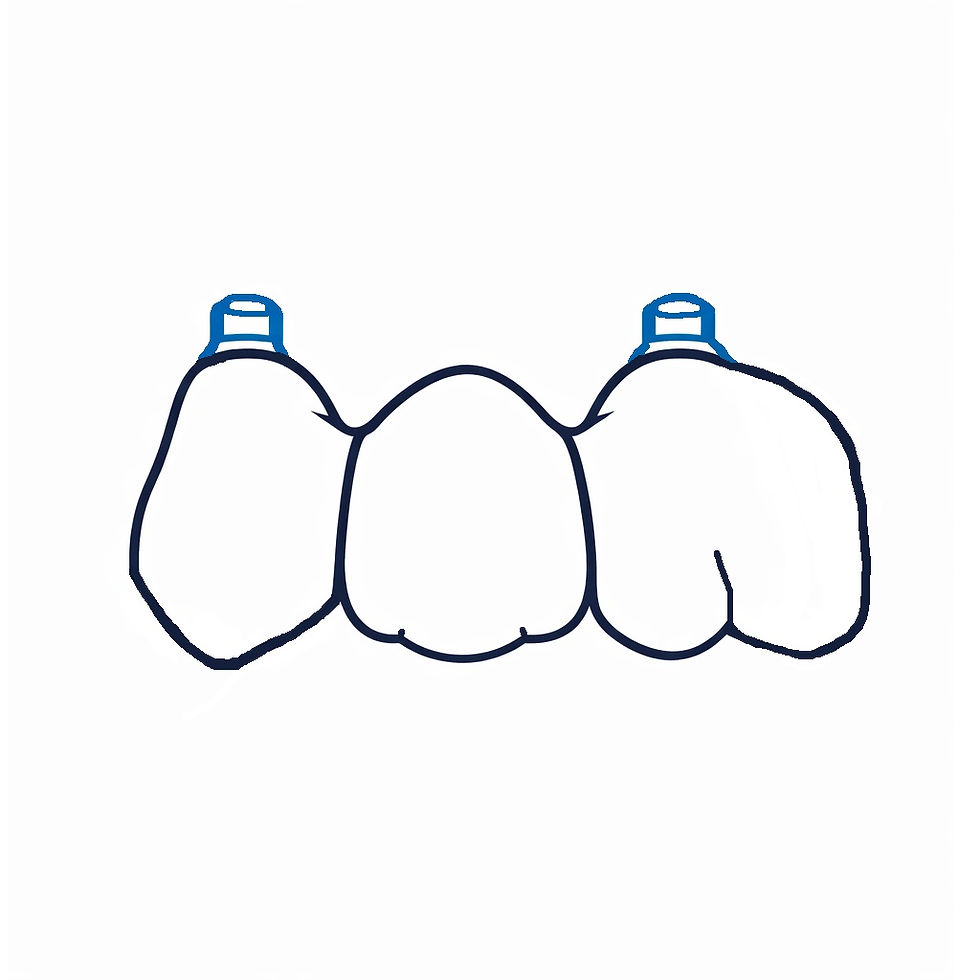
Implant Bridge
Implant-supported bridge for partial edentulism designed digitally to verify connector dimensions, emergence continuity, and occlusal load distribution across the prosthetic span.
Available in monolithic or layered
zirconia frameworks.
For multi-implant restorations replacing several adjacent missing teeth.
TOOTH-SUPPORTED RESTORATIONS

Crowns & Bridges
Full-coverage restorations for anterior and posterior teeth, including single crowns and short-span bridges. Marginal fit, contacts, and occlusion are verified digitally before fabrication.
Zirconia or lithium disilicate
available monolithic or layered.
For conventional crown and bridge restorations on natural teeth.

Veneer
Conservative anterior restoration designed to refine facial contour, incisal edge position, and tooth proportions based on clinical references and digital design planning.
Lithium disilicate veneers standard,
Zirconia available.
For anterior esthetic cases requiring minimal tooth reduction.

Inlay / Onlay
Indirect ceramic restoration designed to restore structural integrity and occlusal anatomy while preserving healthy tooth structure and avoiding full-coverage crown preparation.
Lithium disilicate or zirconia
selected based on occlusal load.
For posterior restorations when full crown coverage is not required.

HOW IT WORKS
Three Steps. One Workflow.
Fabrication
and Delivery
3
Design Review
and Approval
2
Submit
Records
1
Your restoration is fabricated and prepared for delivery.
The approved design is milled and finished according to the selected material and esthetic parameters defined during the design review.
Shade, surface texture, contacts, and occlusion are verified during final quality control before the case leaves the lab.
Typical turnaround: 5–7 business days from design approval.
The restoration is digitally designed and returned for review.
Implant cases are evaluated against the emergence profile and provisional reference when available.
For anterior cases, incisal edge position, tooth proportions, and shade are verified before fabrication.
Fabrication begins only after written approval.
Upload your case records via the DTS portal.
For implant restorations, submit the IOS scan with scan body, opposing arch, bite registration, and shade.
Natural tooth cases require the preparation scan, opposing arch, and clinical photos for esthetic references.
Every submission reviewed before design begins.

1
Submit Records
Upload your case records via the DTS portal.
For implant restorations, submit the IOS scan with scan body, opposing arch, bite registration, and shade.
Natural tooth cases require the preparation scan, opposing arch, and clinical photos for esthetic references.
Every submission reviewed before design begins.
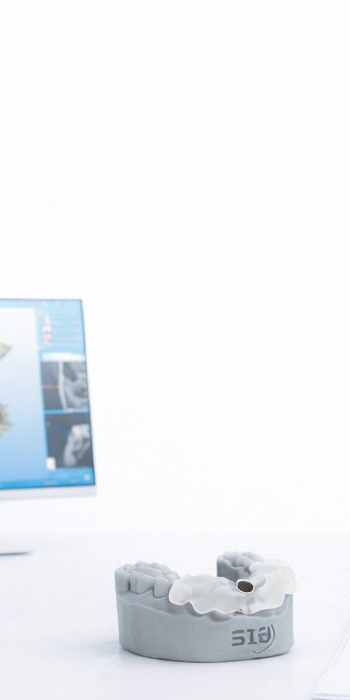
2
Design Review and Approval
The restoration is digitally designed and returned for review.
Implant cases are evaluated against the emergence profile and provisional reference when available.
For anterior cases, incisal edge position, tooth proportions, and shade are verified before fabrication.
No fabrication begins without written approval.

3
Fabrication and Delivery
Your restoration is fabricated and prepared for delivery.
The approved design is milled and finished according to the selected material and esthetic parameters defined during the design review.
Shade, surface texture, contacts, and occlusion are verified during final quality control before the case leaves the lab.
Typical turnaround: 5–7 business days from design approval.
HOW IT WORKS
Three Steps. One Workflow.

WHAT TO PREPARE & WHAT TO EXPECT
Technical Specifications & Requirements
Materials:
-
Crowns: zirconia or lithium disilicate (monolithic or layered)
-
Implant bridges: monolithic or layered zirconia
-
Custom abutments: grade IV titanium
-
Veneers: lithium disilicate standard, zirconia available
-
Inlays / onlays: lithium disilicate or zirconia
Turnaround Times:
-
Full crowns, inlays, onlays:
5–7 business days from written approval -
Implant crowns, veneers and layered restorations:
10–14 business days from written approval -
Rush turnaround available upon request
Start with a Conversation
Restorative cases can be submitted directly through the DTS portal.
If you'd like to review records or discuss material selection first, schedule a short case consultation.
30-minute clinical case review. No commitment required.
Every submission is reviewed by a CDT within 24 hours.
US-fabricated · CDT-reviewed · No offshore handoffs
What you receive:
-
Restoration fabricated to the approved design and selected material
-
Material and shade documentation included with delivery
-
Fit, contacts, and occlusion verified before shipping
-
Seating guidance provided when applicable
-
Direct communication for any post-delivery questions or adjustments
What we need from you:
-
IOS (STL): full-arch scan or prepared arch scan
-
IOS (STL): opposing arch and bite registration
-
Clinical photos: frontal, lateral, occlusal, and retracted views
-
Restoration: type, material preference, and shade
(VITA Classical) -
Stump shade for translucent material cases
(tooth-supported restorations) -
Implant system: Scan Abutment brand, platform size, and connection type (implant cases)
-
Provisional contour scan if emergence was shaped during healing (implant cases)
Have a Case Ready?
Submit your scans, photos and implant details
through our portal to get started
Want to Discuss First?
Schedule a complimentary consultation to discuss materials and design approach for your case
Exploring other services?